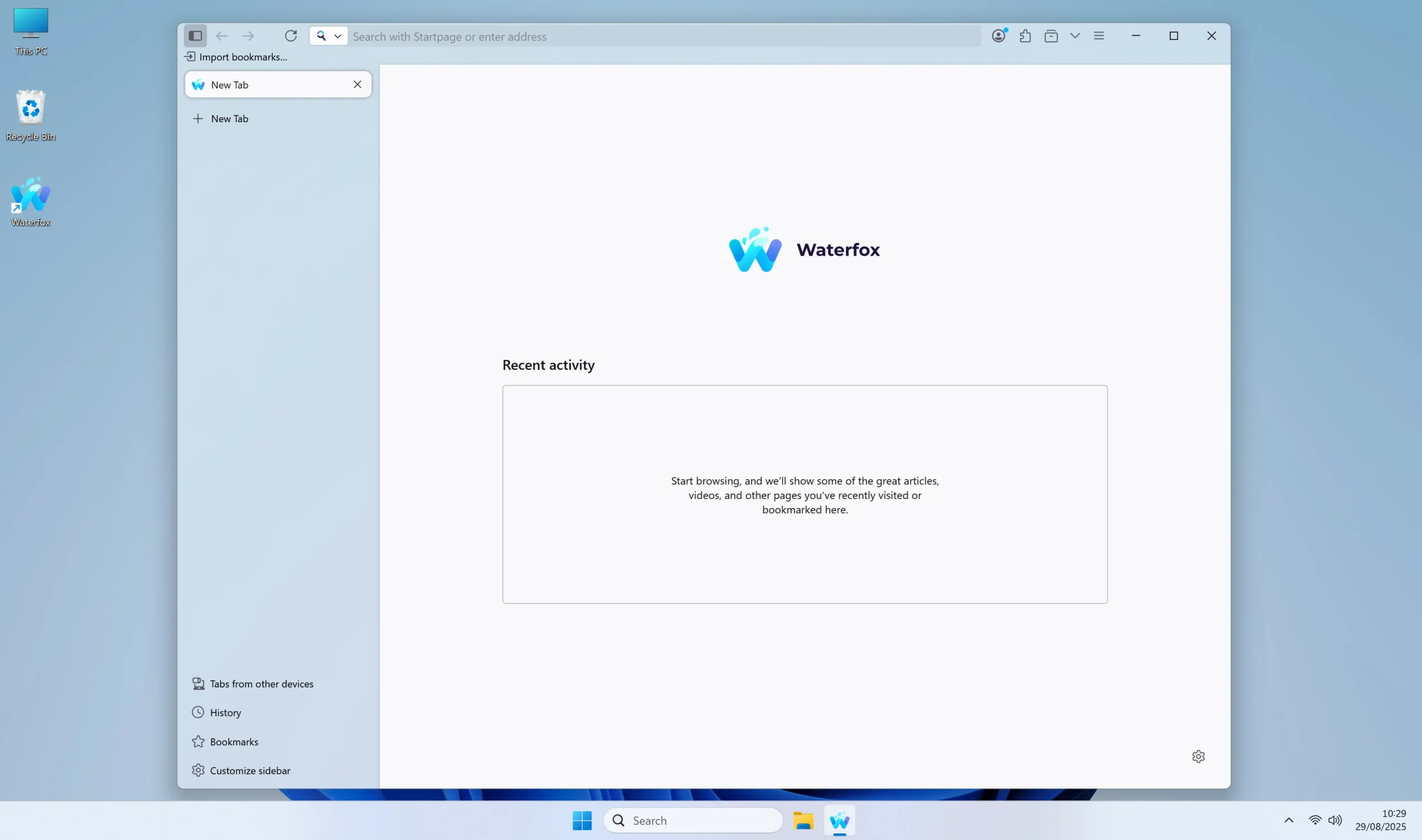
Waterfox has released version 6.6.11, an update that marks a significant shift for this Firefox-based browser. Beyond the usual security patches pulled from the Gecko 140.10 ESR branch, the main feature is a native ad blocker built directly into the browser engine. Currently in beta, this functionality represents a departure from the traditional approach of relying entirely on extensions to filter unwanted content.
The core of this new implementation is the open source library used by Brave for its protection system. Waterfox has integrated this blocking engine natively, moving away from extension dependency for basic filtering functions. The system uses filter lists from EasyList, uBlock Origin, and AdGuard, providing immediate coverage without needing preliminary configuration. As a native component rather than a privileged extension, it should deliver better performance and greater stability, also eliminating conflicts that sometimes occur when multiple extensions try to manage the same traffic. Users can still keep their preferred blocking extensions, since the system is designed to coexist with them, but the developers suggest trying the built-in solution to support the project.
The decision to adopt Brave’s technology wasn’t random. In a recent post marking the browser’s fifteenth anniversary, the team explained how this move is necessary to ensure economic sustainability in a digital ecosystem increasingly hostile to privacy. For those who prefer not to enable native blocking, developers suggested disabling any blocking extensions on the default search engine, Startpage, since revenue from those searches helps fund Waterfox’s ongoing development.
Beyond the new privacy feature, version 6.6.11 comes with some important notes. Developers acknowledged that problems persist with voice and video calls on Discord, despite applying specific patches to work around technical blocks. Additionally, malfunctions with tree tab management extensions have been reported, an issue that will be fully resolved once this functionality is rewritten as a native feature instead of a web extension.
It’s worth noting that the lead developer has announced time away from April 11 to 26. Even so, the final Gecko 140.10 release is confirmed for April 21, ensuring critical vulnerabilities get patched on schedule even during the break. For users seeking a browser focused on privacy and customization, this Waterfox release represents concrete progress.
 Mastodon
 Telegram
 Bluesky
 RSS
RSS